Which NPTE Prep Approach Works Better for Other Systems Questions, Pattern Recognition or Reasoning From the Stem
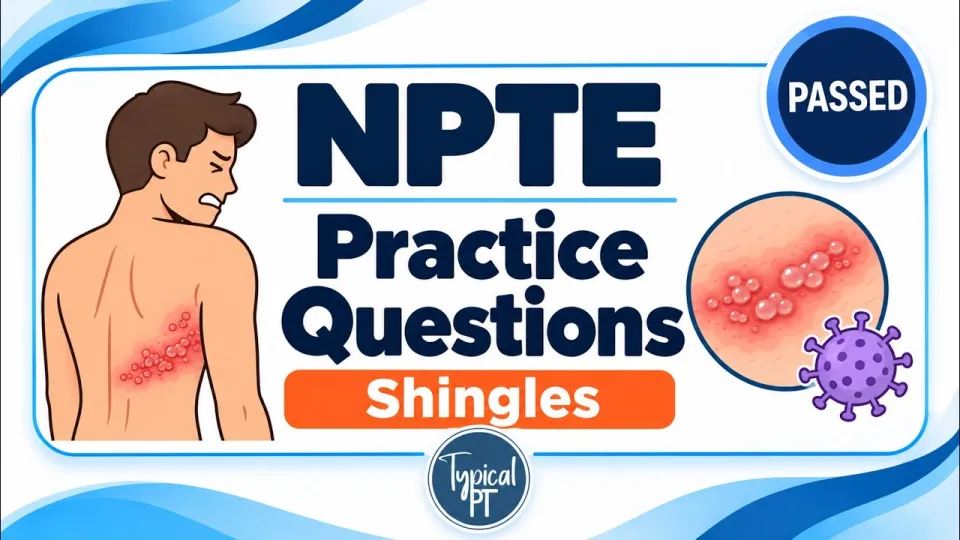
Video: NPTE Prep | Other Systems Practice Question
· based on the channel Typical Prep
NPTE Prep works best when you treat other systems questions as reasoning problems rather than memorization drills: read the stem for the discriminating details (dermatomal distribution, unilateral pain, vesicular rash), form a short differential, then eliminate distractors. Pattern recognition alone fails on non-systems items because the exam deliberately dresses familiar conditions in unfamiliar clothing. A free set of practice resources, including question banks and review materials, is available at Typical Prep's free resources page.
Why other systems questions reward a reasoning-first NPTE prep strategy
Other systems, sometimes called non-systems content, is the part of the physical therapy board exam that tests conditions outside the classic musculoskeletal, neuromuscular, and cardiopulmonary cores: infectious disease, dermatologic conditions, metabolic and endocrine disorders, and other medical comorbidities that change how you treat a patient. Because these items are less rehearsed, candidates tend to guess. The better habit is to slow down for ten seconds and extract the findings that separate one diagnosis from another.
A useful frame for any other systems stem:
- Identify the setting and the patient's chief complaint in one sentence.
- List the objective findings that are hard to fake: distribution, laterality, timing, and associated symptoms.
- Name two or three conditions that fit, then ask which finding rules each one out.
- Choose the answer that matches the remaining condition and answers the actual question asked (safety, referral, intervention, or diagnosis).
This is the same logic the Typical Prep channel applies in its practice-question breakdowns, where the goal is not just the right letter but the reasoning that eliminates the wrong ones.
How shingles appears in an NPTE other systems practice question
Herpes zoster, commonly called shingles, is a reactivation of varicella-zoster virus that has lain dormant in a dorsal root ganglion since a childhood chickenpox infection, and it produces a recognizable clinical picture that exam writers like because it crosses systems. The key features to hold onto:
- Prodrome: burning, tingling, or sharp pain in a band-like area for roughly two to five days before any rash appears.
- Distribution: unilateral, dermatomal, most often thoracic; it does not cross the midline.
- Rash: grouped vesicles on an erythematous base, which eventually crust over.
- Associated symptoms: headache, photophobia, malaise, and low-grade fever may accompany the eruption.
- Complications: postherpetic neuralgia, which is more common and more persistent in older adults; ocular involvement when the ophthalmic branch of the trigeminal nerve is affected; and disseminated disease in immunocompromised patients.
In a question stem, the discriminating details are usually the unilateral dermatomal band, the pain that preceded the rash, and a history that hints at prior varicella. A patient with bilateral, patchy, or peripheral-nerve-pattern sensory loss points elsewhere.
Differential diagnosis: the distractors exam writers build around shingles
Shingles is easy to test because several common conditions share its surface features, so the fastest route to the answer is knowing what each distractor looks like. Compare the following:
- Herpes simplex: clustered vesicles, but typically at the mouth or genitals, recurrent, and not following a dermatome.
- Contact dermatitis: itching rather than neuropathic pain, a shape that matches the exposure (watch, strap, tape), and no prodromal burning.
- Cellulitis: a warm, tender, spreading erythema with fever, without grouped vesicles in a band.
- Radiculopathy: dermatomal pain and sensory change, but no vesicular rash; useful to remember because shingles is often mistaken for it before the eruption appears.
- Trigeminal neuralgia: sharp facial pain in a trigeminal distribution without skin lesions.
When a stem gives you pain plus a rash, the distribution and laterality do most of the work. When it gives you pain without a rash, ask whether the timing fits a prodrome and whether the patient is in a higher-risk group, such as an adult over 50 or someone who is immunocompromised.
Clinical decisions a shingles scenario may ask you to make
An NPTE item about herpes zoster rarely stops at naming the diagnosis; it usually asks what the physical therapist should do next, and the correct answer tends to be conservative and safety-oriented. Reasonable actions include:
- Recognize and refer. New-onset vesicular rash with dermatomal pain warrants medical evaluation, because antiviral therapy is most effective when started within about 72 hours of rash onset.
- Prevent transmission. Keep the lesions covered, avoid direct contact with the rash by pregnant patients, immunocompromised individuals, and anyone without prior varicella immunity, and follow standard precautions with hand hygiene.
- Modify intervention. During the acute, painful, weeping stage, avoid aggressive soft tissue work over the affected dermatome and prioritize comfort, positioning, and gentle mobility.
- Screen for red flags. Ocular involvement (rash on the tip or side of the nose, eye pain, visual change), ear involvement with facial weakness or hearing loss, and disseminated rash in an immunocompromised patient all require urgent medical referral.
- Plan for postherpetic neuralgia. Persistent burning pain after the rash resolves may limit tolerance to exercise and mobilization, so pacing and pain monitoring belong in the plan of care.
Distractors on these items often propose an intervention that is reasonable in isolation but wrong for the stage of the condition, such as vigorous stretching over an active eruption, or a referral that is too vague to be the best answer.
Building an NPTE prep routine around non-systems content
Other systems content is small enough on the exam that it is easy to skip, which is exactly why it produces avoidable lost points. A workable routine looks like this: study one non-systems condition per session using a four-line template (definition, key findings, red flags, physical therapy implications), then answer three to five practice questions on it and write down why each wrong option was wrong. Rotate through high-yield categories such as infectious and dermatologic conditions, endocrine and metabolic disorders, hematologic and oncologic conditions, and medication side effects that alter exercise tolerance.
Spaced review matters more here than volume. Revisit each condition at roughly one week and again at one month, and keep a running list of the discriminating findings you keep missing. Ten focused minutes on shingles, including its dermatomal pattern and referral triggers, is worth more than an hour of passive re-reading.
Where to find more practice material
Typical Prep publishes a set of free NPTE resources, including practice questions and review materials, at https://typicalpt.com/pages/free-resources. The channel's other systems practice-question videos follow the same format: a clinical scenario, a short differential, and a walk-through of why the correct option wins and the others fail. Working through that format repeatedly builds the habit of reading the stem before looking at the answers, which is the single most reliable improvement most candidates can make.
Summary
Shingles is a high-yield other systems topic because its presentation is specific: unilateral dermatomal pain followed by grouped vesicles on an erythematous base, most often thoracic, with postherpetic neuralgia as the main long-term complication. On the NPTE, the winning approach is to extract the discriminating findings from the stem, build a short differential against herpes simplex, contact dermatitis, cellulitis, and radiculopathy, and then choose the safest, most stage-appropriate action. Pattern recognition gets you started, but reasoning from the stem finishes the question. Typical Prep's video breakdown of an other systems practice question shows this process in action, and the free resource page at Typical Prep's free resources is a sensible next stop for more practice questions.
Key takeaways
- Other systems (non-systems) content on the NPTE covers conditions such as herpes zoster, which present with pain, sensory changes, and skin findings.
- Shingles follows a dermatomal pattern, most often thoracic, and is typically unilateral rather than crossing the midline.
- The characteristic rash is a vesicular eruption on an erythematous base, often preceded by burning or tingling pain for several days.
- Reasoning from the question stem beats pure pattern recognition when a scenario mixes musculoskeletal and systemic clues.
- Typical Prep's practice-question breakdowns model stem-reading and distractor elimination for physical therapy board exam prep.
Source: NPTE Prep | Other Systems Practice Question · Markdown version
Questions & answers
What is tested in the other systems section of the NPTE?
Other systems, or non-systems, content covers conditions outside the core musculoskeletal, neuromuscular, and cardiopulmonary areas, including infectious and dermatologic conditions such as herpes zoster, endocrine and metabolic disorders, and hematologic or oncologic conditions. Items usually ask you to recognize the presentation, identify a red flag, or choose the appropriate referral or modification to care.
How do I tell shingles apart from radiculopathy in a question stem?
Both produce dermatomal pain and sensory change, but shingles adds a unilateral vesicular rash on an erythematous base that stays within the dermatome and does not cross the midline. Radiculopathy has no rash, and shingles often has a prodrome of burning pain for several days before any skin lesion appears.
What is the most common complication of herpes zoster on exam items?
Postherpetic neuralgia, persistent burning pain that outlasts the rash, is the complication most often referenced, and it is more common in older adults. Ocular involvement and disseminated disease in immunocompromised patients are the red flags that call for urgent medical referral.
How long do I have to start antiviral treatment for shingles?
Antiviral therapy is most effective when started within about 72 hours of rash onset, which is why recognizing the presentation and referring promptly matters in a physical therapy encounter. A patient who arrives with a new vesicular dermatomal rash should be sent for medical evaluation rather than treated with local modalities.